Infinite Galaxy
- 3.2
- Rating
- 5.00M
- Installs
- Free
- Price
 Analysis by App-foxy
I approached Infinite Galaxy as a long-term strategy game rather than a quick space-themed distraction. Developed by CamelStudio, it puts me in a science-fiction setting where movement and exploration are central, with a large galaxy to navigate and decisions that gradually shape how I spend my time. The basic appeal is easy to understand: I can open the game, look for a new destination, and then decide whether to focus on expansion, preparation, or simply learning how the galaxy works.
That freedom is also the first thing I would qualify. This is not the kind of strategy game I would recommend to someone who wants a complete match in a few minutes. Its free-to-play structure, persistent progression, and optional purchases make more sense for players who enjoy returning regularly. I found the experience more rewarding when I treated it as a continuing project instead of expecting every session to deliver a dramatic victory.
What the space strategy experience feels like
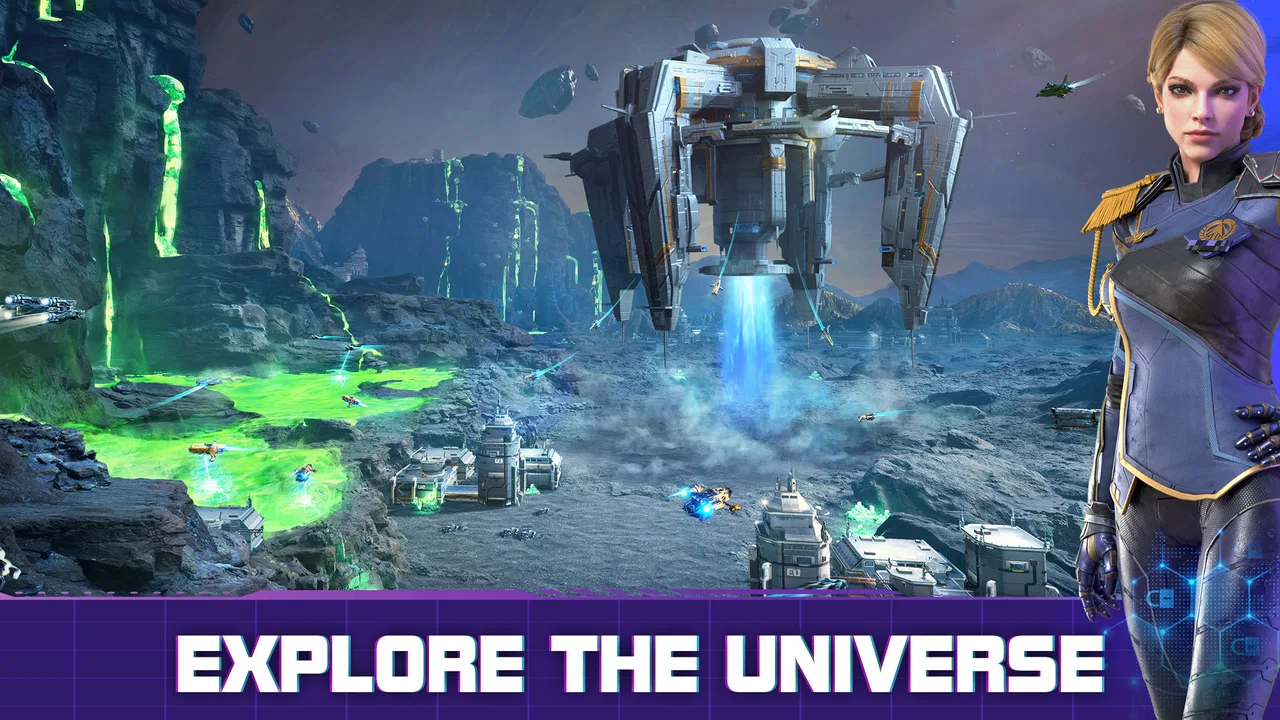
The game belongs to the strategy category, but its identity comes from combining planning with exploration. The store presents it as a space game built around moving freely through an infinite galaxy, and that idea is more important than any single action. I am not just tapping through isolated battles; I am learning how to use the available space, choose where to go next, and decide which goals deserve attention.
You May Also Like

 Blood Strike: 2.5 Anniversary
Blood Strike’s Loadouts Turn Every Drop Into a Tactical Gamble
A close look at Blood Strike’s custom loadouts: how fast access to signature weapons reshapes its battle royale rhythm, rewards preparation, and narrows the gap between fights.

 Pandora - Music & Podcasts
Pandora’s Music Is Easy to Start, but Harder to Recover
Pandora’s strength is its low-effort path from a seed to a station. Its weak spot is how much confidence it asks you to place in connection, setup, and quiet recovery.

 8 Ball Pool
 Is Built on Rivalries, Rematches, and Routine
A close look at the rivalries, rematches, shared routines, and unanswered safety questions that turn a quick pool match into a persistent mobile community.

 Samsung Music
’s Quiet Strength Is Playing What You Already Own
Its reach comes less from spectacle than from dependable access to a personal library. That simplicity is both the app’s strongest retention engine and its ceiling.

 AccuWeather: Weather Radar
AccuWeather Review: A Quick, Clear Forecast for Everyday Decisions
For everyday plans, the best forecast is the one you can understand quickly. AccuWeather makes rain timing, radar, and local conditions easy to act on, with a few trade-offs.

 Hill Climb Racing
Why Hill Climb Racing Still Turns Crashes Into One More Run
A tiny car, a bumpy hill and one more upgrade: Hill Climb Racing keeps resurfacing because its simple chaos makes every near-miss feel personal.
More From Our News Desk
View All News


That makes the opening especially important. New players should resist the urge to hurry through every prompt or spend resources simply because the game makes an option immediately available. My first useful habit was to pause after each new system or objective and ask what it changed: did it open a route, improve my position, or merely offer another task? That small pause prevents the early game from becoming a blur of buttons.
The interface has the familiar rhythm of a mobile strategy title. I check what is available, select a destination or objective, start an action, and return later to assess the result. This structure works well on a phone because it does not require me to hold a complicated sequence in my head for every second of play. At the same time, it means the game can feel slower than an action-focused space title. The satisfaction often comes from making a sensible choice before waiting, not from constant manual control.
I would describe the mood as deliberate rather than frantic. Exploration gives the game a sense of scale, while the strategy layer asks me to think about timing and priorities. Players who enjoy watching a plan develop will probably connect with it more quickly than players who need immediate action. If your ideal science-fiction game is a fast shooter, this will feel like a very different use of the theme.
How I would approach the first sessions
My advice is to use the early sessions as a learning period. Instead of trying to optimize everything, I would identify the main loop first: how movement works, what actions consume time or resources, and which objectives unlock the next meaningful step. The most useful early question is not “What is the strongest option?” but “What does this option teach me about the game?”
I also recommend keeping a simple priority order. I would first handle actions that unlock access or improve future choices, then take care of immediate objectives, and only afterward spend time on optional activities. This is a practical way to avoid scattering progress across too many directions. In a galaxy built around exploration, having somewhere useful to go is usually more valuable than collecting a long list of unfinished errands.
A second helpful habit is to check the game at natural points in the day rather than opening it repeatedly without a purpose. For example, I might start an action before leaving home, review the result during a break, and make the next decision later in the evening. That routine suits the slow-burn structure better than trying to force a full strategy session into every spare minute.
The game is free to download and play, which lowers the barrier to testing it. It is rated for Everyone 10+, so its presentation is aimed at a broad audience rather than an adult-only niche. The current version is 3.2.0, and the minimum operating system requirement is Android 8.0. Those details make it approachable for many Android users, although the actual comfort of play will still depend on the phone and on how much screen time someone wants to give a persistent strategy game.
Where spending enters the experience
The purchase range runs from $0.99 to $99.99 per item. I consider that an important part of the decision, even for someone who intends to remain free-to-play. A low entry price can make a small convenience feel harmless, while the upper end shows that the game also supports much larger optional purchases. I would therefore decide on a personal spending limit before getting deeply involved, rather than making that decision in the middle of a frustrating delay or a competitive setback.
My preferred way to evaluate the purchase system is to play long enough to understand what normal progress feels like before buying anything. If I do not yet know whether I enjoy the basic loop, spending cannot solve that problem. It is more sensible to ask whether a purchase improves a part of the game I already like, rather than using it to bypass a part I dislike.
This distinction matters because strategy games can create pressure through time, goals, and comparison with other players even when the purchase itself is optional. I would not call every optional payment unfair, but I would remain cautious whenever the game makes waiting feel like a mistake. The healthiest approach is to treat purchases as conveniences, not as proof that I am playing correctly.
Progression, pressure, and the value of patience
The central tension for me is between curiosity and patience. Exploration encourages me to keep moving and see what comes next, while progression systems naturally make me wait, prepare, or gather enough resources for a larger step. That tension can be satisfying when I have a clear plan. It becomes tiring when every session turns into maintenance with no decision that feels meaningful.
I found that progress feels better when I group actions around one objective. If I want to reach a particular area or prepare for a difficult challenge, I can make smaller choices that support that goal. If I instead accept every available task, I risk turning the game into a checklist. The difference is subtle but important: one approach gives me direction, while the other gives me activity without much ownership.
Players who dislike waiting should think carefully before committing. This is not necessarily a bad design choice; a slower pace can make planning matter. However, it does mean that the game is a poor match for someone who wants an immediate reward every time they open the app. I would choose a faster arcade strategy game instead if my available playtime is limited to short bursts with no interest in returning later.
There is also a social pressure that can appear in persistent strategy games, even when I am not actively looking for competition. Seeing other players advance can make ordinary progress seem inadequate. My solution is to compare my current position only with my previous position. That sounds simple, but it keeps the game closer to exploration and planning and further away from an endless race.
Is the competition fair?
Fairness is difficult to judge from the outside, and I would not pretend that a purchase range alone proves whether competition is balanced. What I can say is that the existence of optional items priced as high as $99.99 means competitive-minded players should pay attention to how spending affects the experience before investing serious time. I would test the game without paying first, observe whether progress remains enjoyable, and decide whether the competitive layer feels like a contest of decisions or a contest of budgets.
For me, the safest expectation is to enjoy the strategic and exploratory parts without assuming that a free account will always stand on equal footing with every paying player. That is not a claim about a specific mechanic; it is a practical reason to keep expectations measured. If your main goal is a perfectly level competitive environment, a premium strategy game with a single upfront price may be a better choice.
On the other hand, players who like a broad galaxy, ongoing development, and flexible personal goals may be comfortable with a less absolute idea of winning. I can still get value from planning routes, learning the systems, and improving my own decisions even if I am not trying to dominate a ranking. The game works best for me when competition is one source of motivation, not the only reason to play.
A useful test is to ask how I feel after a setback. If I immediately want to rethink my plan, the strategy layer is doing its job. If I immediately feel that I need to purchase something just to continue enjoying the game, I would stop and reassess. That reaction tells me more about whether the spending model suits me than any promotional description could.
Who should play, and who should skip it
I would recommend Infinite Galaxy to someone who enjoys science-fiction settings, gradual development, and the feeling of having a large map to investigate. It is particularly suitable for players who like checking in on a plan, making a few decisions, and returning later to see how those choices worked out. The free starting point also makes it easy to sample without committing money immediately.
I would be more cautious recommending it to a player who wants a self-contained campaign, a quick ending, or a completely purchase-free competitive experience. Someone who prefers direct control and constant action may find the strategic pacing too passive. Likewise, a player who becomes uncomfortable when a free game presents expensive optional items should establish a firm boundary or choose a different model from the beginning.
Compared with a traditional premium strategy game, this one offers a more persistent and open-ended relationship with the galaxy, but it also asks for more patience and tolerance of free-to-play pressure. Compared with a fast mobile space action game, it gives me more room to plan but less immediate excitement. Those trade-offs define the choice better than the space setting alone.
My trust verdict after weighing the trade-offs
The game has clear reach: it has passed five million installs, carries an average rating of 3.2 from roughly thirty-one thousand ratings, and has about 1.2 thousand written reviews. Those figures suggest a sizeable audience, but the middling average also tells me to approach it with realistic expectations rather than assuming universal satisfaction. Popularity makes it worth trying; it does not remove the need to decide whether its pace and purchase structure fit me.
My own verdict is cautiously positive for the right player. I like the sense of scale and the way exploration gives ordinary decisions a larger context. I also appreciate that I can begin for free and learn the game before considering any purchase. The main friction is that the long-term structure can blur the line between thoughtful planning and simply waiting, especially if I let the game dictate my priorities.
If I were recommending it to a friend, I would say: try it without spending, play slowly, and judge the experience by how satisfying your decisions feel. Set a budget before the first tempting offer appears. Focus on one meaningful objective at a time, and do not confuse a larger purchase with better strategy. For a patient player who enjoys an ongoing space sandbox with strategic choices, that approach can make the journey worthwhile.
My bottom line: Infinite Galaxy is worth testing for its exploratory strategy, but it earns trust only when I keep control of my time, expectations, and spending. It is not the best fit for everyone, yet it has enough atmosphere and long-term structure to reward players who prefer planning a route through a huge universe over chasing instant action.
FAQs for Infinite Galaxy
01What is Infinite Galaxy about?
Infinite Galaxy is a science-fiction strategy game in which you command a spaceport, build and upgrade spacecraft, recruit commanders, and explore a large galaxy. The main gameplay combines resource management, technological research, fleet customization, story missions, and real-time battles. You can play independently, but joining an alliance is important for receiving assistance, participating in group events, and competing for territory and rewards.
02Is Infinite Galaxy free to download and play?
Yes, Infinite Galaxy can generally be downloaded and played for free on supported Android and iOS devices. However, it includes optional in-app purchases for resources, upgrade materials, acceleration items, and other conveniences. Progress is possible without spending money, although free players may need more patience, especially during longer construction timers and competitive events against players who invest heavily.
03Does Infinite Galaxy require an internet connection?
Yes, Infinite Galaxy is primarily an online game and requires a stable internet connection for most of its features. Your account, progress, alliance activities, events, chat, and multiplayer battles depend on communication with the game servers. It is therefore not a suitable choice for fully offline play. A reliable Wi-Fi or mobile-data connection is recommended to avoid interruptions during battles or timed activities.
04Is Infinite Galaxy suitable for beginners?
Infinite Galaxy is accessible to beginners, thanks to its introductory missions, guided upgrades, and early rewards that explain the major systems. Nevertheless, the game becomes more complex as you unlock additional ships, commanders, technologies, and alliance mechanics. New players should focus on completing the tutorial, improving one strong fleet, protecting resources when necessary, and joining an active alliance rather than upgrading everything at once.
05Does Infinite Galaxy contain multiplayer features and in-app purchases?
Yes, multiplayer is a central part of Infinite Galaxy. Players can join alliances, communicate with other members, help complete research, attack targets together, defend territory, and compete in seasonal or server-wide events. The game also offers optional purchases, and these can speed up development or provide additional resources. Spending is not mandatory, but it may influence progression and competition in highly active servers.
Pros
- Impressive real-time 3D visuals and detailed space environments.
- Large galaxy map encourages exploration
- resource gathering
- and strategic planning.
- Frequent events provide additional objectives and rewards.
- Alliance features make cooperation and coordinated attacks engaging.
- Playable without spending
- with steady progress through regular activity.
Cons
- Upgrade timers become lengthy as you advance through the game.
- Progress can feel heavily influenced by premium purchases.
- The interface may seem overwhelming for new strategy players.
- Requires a stable internet connection for nearly all features.
- Repeated resource collection and missions can become routine over time.

Infinite Galaxy
Gallery